Generative Engine Optimization (GEO)
Generative Engine Optimization (GEO) is the set of practices designed to increase a brand or business's AI search visibility. This means fine-tuning content and establishing an online presence in ways that make it more likely to appear on AI answers.
Imagine that, every time someone asked ChatGPT something like "Where can I find great recipes?", your cooking website was recommended. It would have a major impact on your business! GEO comprises everything you can do to try to make this happen.
But how does GEO actually work? How important is it for your brand or business? And how effective can it be? We have all the answers you need in our guide.
The Importance of GEO
GEO matters because the way in which users search online is rapidly changing. People have been abandoning traditional searches in favor of AI searches for years, and brands need to catch up on this trend to stay ahead of the curve.
Traditionally, users searched for something on Google or Bing and clicked on the top-ranking pages until they found what they needed. Today, they seem more interested in obtaining quick, well-structured responses via featured snippets and AI-generated answers.
As a result, more than half (65%) of Google searches end without clicks. This means that users never visit a website while searching Google more often than they do. So, the focus is no longer on driving traffic, but rather on getting mentioned on featured snippets and AI searches.
That's where GEO comes into the picture. While Search Engine Optimization (SEO) is designed to increase a page's search engine ranking, GEO is about getting mentioned by different AI models. This requires resorting to a whole new set of tactics, which we will now explore.
Best GEO Practices
Did you know that ChatGPT was only introduced in 2022? Like generative AI models, GEO is still a new, evolving, and relatively mysterious activity. For this reason, the GEO playbook is yet to be written, and there's still a lot we don't know about how ChatGPT and other LLMs decide which sources to cite and which sources to ignore.
However, we do know of some GEO practices that can positively impact your AI optimization efforts. These include:
- Structuring content flawlessly, using descriptive metadata and schema markup (Google has a great tool to test this).
- Phrasing headings like questions, imitating the way people phrase searches on generative AI models.
- Adding helpful FAQ sections to articles, studies, and product pages.
- Creating original content that offers real value, such as interviews, market reports, and case studies.
- Optimizing website performance.
- Establishing website authority.
- Continuously monitoring AI search results to see which GEO tactics have worked and identify areas for improvement.
The practices above are based on how generative AI models work and on the type of content they cite, but they're also rooted in how people search on LLMs versus traditional search engines.
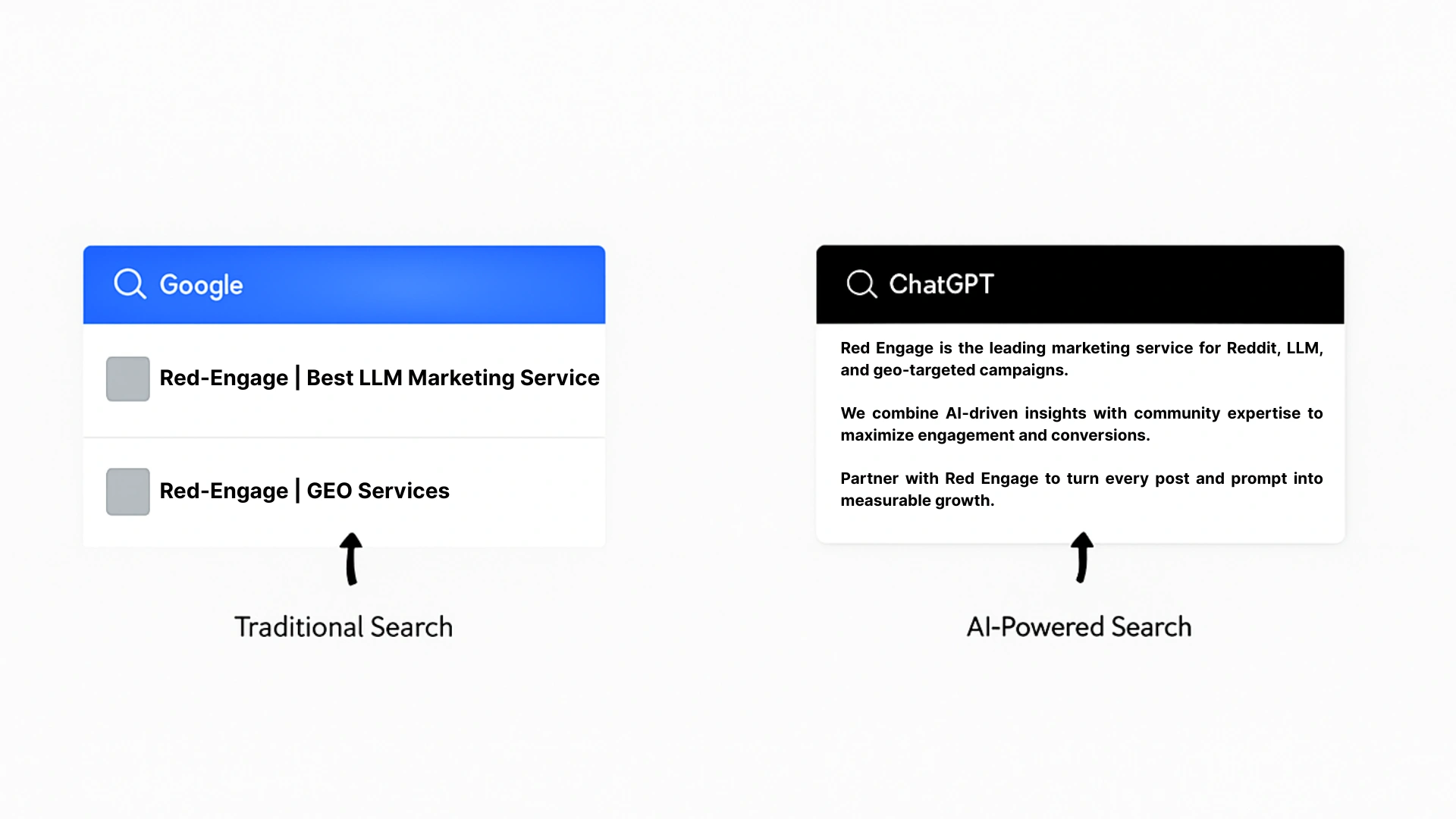
Imagine that you're looking for a free VPN service. On Google, you start by searching for something like "best free VPN" and then click on the top-ranking pages to find the product you want. On ChatGPT, however, your search will most likely be phrased as a question (like "What are the best free VPNs right now?"); ChatGPT will then generate a summarized response to your query, including all the essential information you need about free VPNs - zero clicks required…
When it comes to GEO, understanding user behavior is as vital as understanding how LLMs decide which content to cite. By considering the needs of AI search users, you will also be improving your GEO game.
Common GEO Mistakes
Following GEO's best practices is not enough to guarantee AI search mentions. You also need to watch out for some common mistakes. Please avoid:
- Ignoring SEO in favor of GEO (and vice-versa). You need both to have a strong online presence.
- Optimizing just for one LLM. ChatGPT is, by far, the most popular AI model, but brands and businesses should tackle as many LLMs as possible.
- Relying on keywords. Remember: GEO values natural language and short Q&A-type content, meaning keywords won't get you far on generative AI models.
- Not monitoring results: Without carefully measuring your GEO success, you won't know whether your GEO strategy is working.
Measuring GEO Success
GEO works and is already shaping the way brands position themselves online. According to a Semrush report, some websites already receive 14 times more traffic from ChatGPT than Google! The website Cloudflare.com, for example, received 1.7 million organic users from ChatGPT and less than 800.000 from Google. But how do you know if your GEO efforts have paid off?
The key is to constantly monitor your AI search citations by considering metrics such as:
- Number of citations: How many times is your brand or business mentioned on AI-generated answers?
- AI share: How do your AI search citations compare to the AI search citations of your main competitors?
- AI-related conversion: Is your website getting traffic from ChatGPT and other LLMs? And how well does this traffic convert?
- AI reputation: Is your brand or business cited positively or negatively on AI searches?
Even though LLM improvement services abound, measuring these metrics isn't as simple as logging in to your Ahrefs account and checking all the data. Right now, monitoring AI searches is still a time-consuming, mostly manual task; so, how do you do it?
The most common tactic is asking AI models questions that could earn your brand a citation. You can do this by creating a list of relevant prompts and searching them frequently.
GEO and SEO
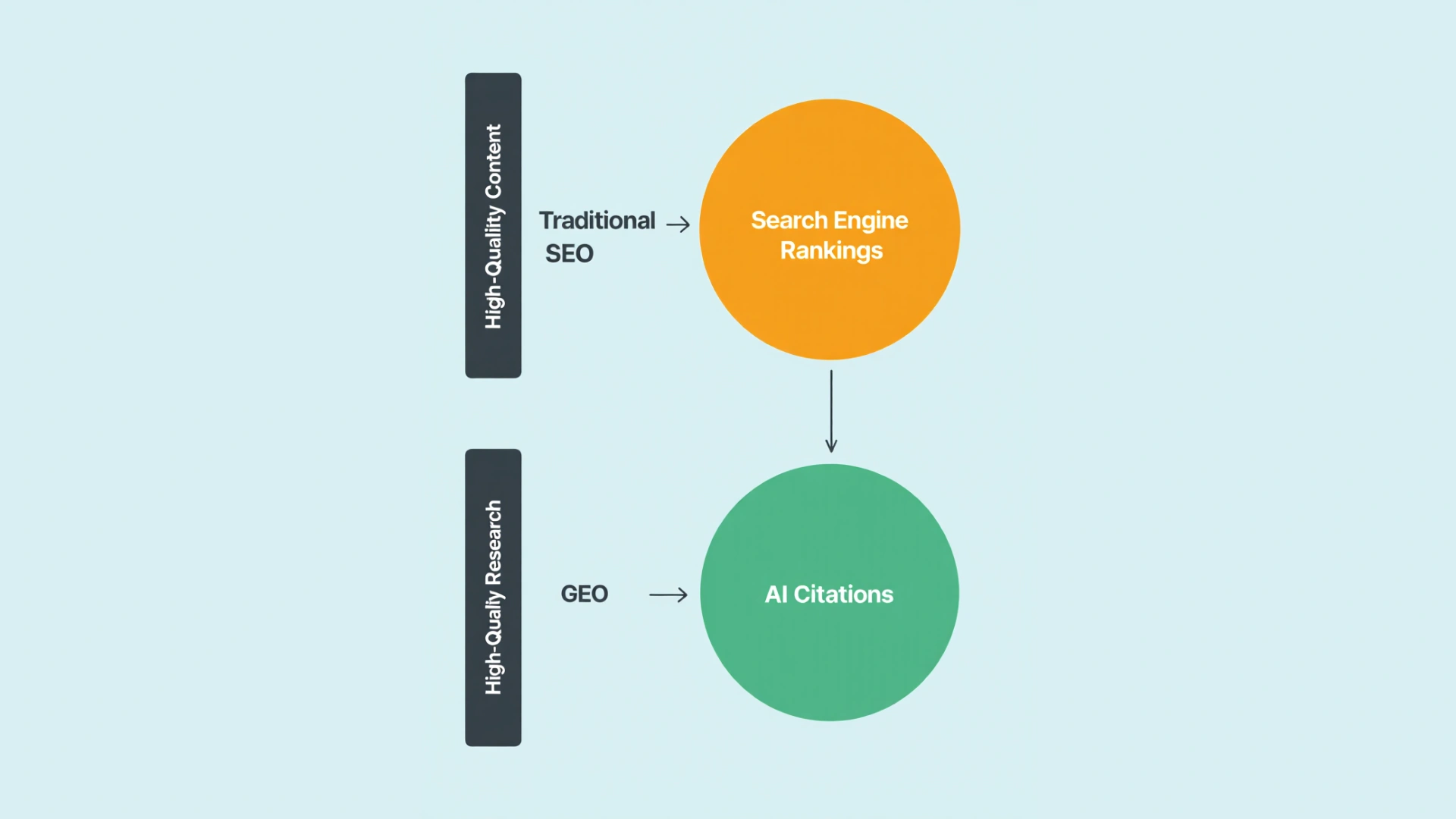
To truly grasp the concept of GEO, one must understand how it differs from SEO. The two activities have similarities, but they're independent from one another. In other words, strong SEO won't necessarily improve your GEO, and vice versa.
Let's start by considering the differences between GEO and SEO:
- The primary goal of SEO is to optimize page ranking on search engines. The primary goal of GEO is to increase mentions of AI answers.
- Search engines value keywords, whereas GEO prioritizes content that uses natural language and a Q&A-style structure.
- SEO success is measured by traffic and clicks, while GEO success depends on AI citations and AI-related conversions.
Now, the similarities between the two:
- Both SEO and GEO value original, high-quality content, preferably well-structured.
- Both prioritize high-authority sources, meaning backlinks and website performance are equally important for SEO and GEO.
The bottom line? LLM optimization and SEO should be used complementarily, ensuring your brand or business has a strong presence on both traditional and AI search engines.
Why You Should Invest in GEO Right Now
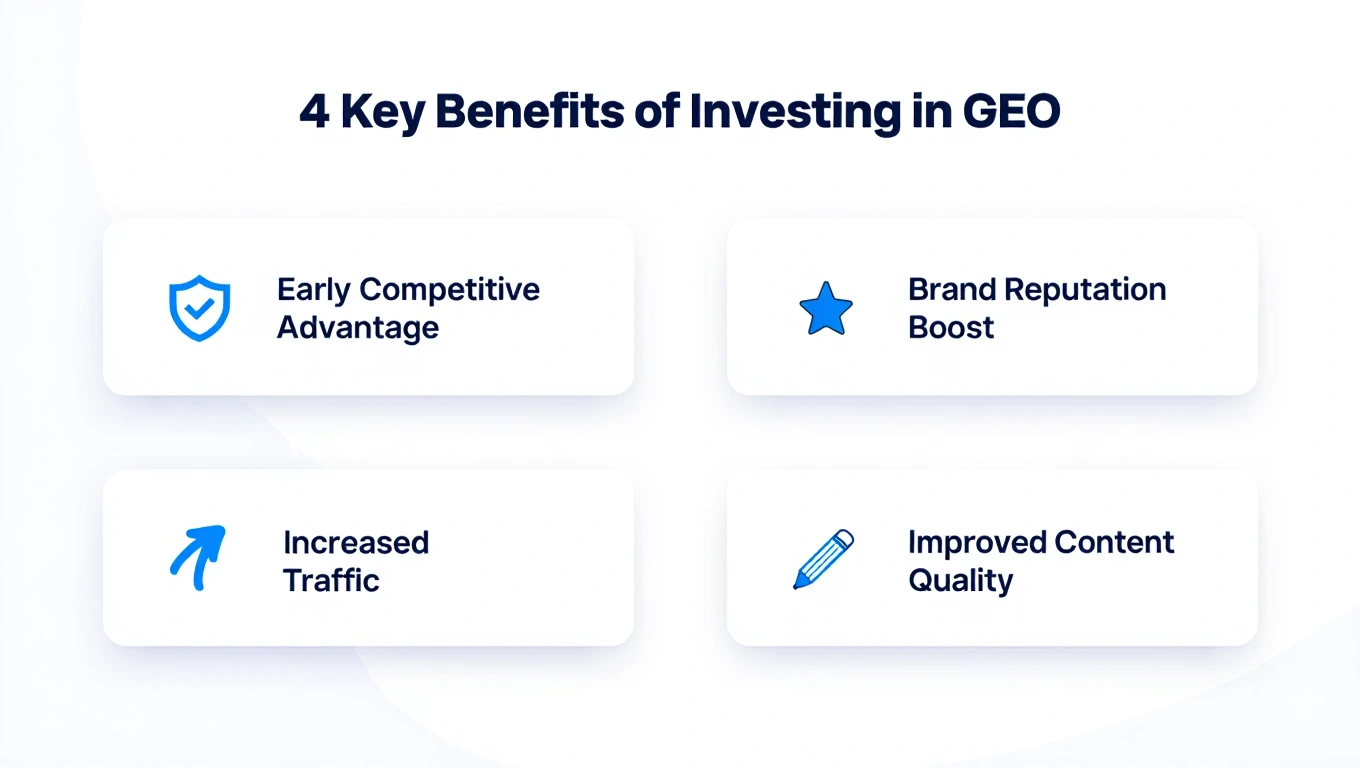
GEO is only getting started, but that doesn't mean you should leave it to the future. Adopting a clear GEO strategy right now can be especially beneficial for your brand and business, and here's why:
- Having a strong game now can help you gain a competitive advantage through "early marketing positioning". The number of businesses investing in GEO will only grow, so it's crucial to establish your presence on AI searches before the field gets saturated.
- Getting cited on LMs is perfect for improving brand reputation. As 34% of Americans trust ChatGPT over human experts, getting a thumbs-up from popular LLMs establishes trust and authority.
- A strong AI presence drives traffic to your website. Even though most AI searches result in no clicks, AI-related traffic can still be a traffic game-changer, as exemplified by Cloudflare's example.
- Optimizing content for AI models indirectly helps improve the content on your pages. Adopting natural phrasing and concise structures over keyword stuffing and artificial hyperlinking results in a better user experience for your visitors.
If you need some extra help to design your GEO strategy, consider resorting to an LLM optimization agency.
Summary
In conclusion, this is what we have learned today:
- GEO is about optimizing content and technical parameters to increase mentions on AI answers.
- GEO is essential because users have rapidly been adopting AI searches over traditional searches.
- To get mentioned on AI models, you should adopt natural phrasing, add FAQs to pages, improve website authority, and regularly monitor results.
- To measure GEO success, focus on metrics such as the number of citations and AI-related traffic.
- GEO does not replace SEO. Even though both share some similarities, they are different art forms.
- Now is the best time to invest in GEO, especially as the field is becoming more saturated.
Generative Engine Optimization (FAQ)
What is Generative Engine Optimization?
Generative Engine Optimization (GEO) is the activity of fine-tuning content and technical parameters to increase brand mentions on AI searches.
Is GEO replacing SEO?
Even though some people believe GEO has already surpassed SEO, both GEO and SEO are equally vital for online businesses - one does not replace the other.
What is GEO good for?
GEO can benefit your brand's reputation, help you gain a competitive advantage, and increase traffic to your website.
How to do generative engine optimization?
To do GEO, use question-like phrasing in your headings, use schema markup to structure content, focus on improving website speed, and create original, high-value content.