What's an LLM Optimization Agency &
Why Do You Need One?
In short, an LLM optimization agency is an agency that provides AI-oriented marketing services. This type of agency relies on the use of Large Language Models like ChatGPT (hence the LLM) to help their clients improve their online visibility, create better content, research competitors, and so forth.
At a time when over half of medium-sized and large companies in the United States have already incorporated AI in their processes, it's urgent to consider whether your brand/business needs LLM optimization services or not. Are these agencies the real deal? Or are they just trying to ride the AI trend?
What's the Point of LLM Optimization?
LLM optimization should not be confused with LLM fine-tuning, the practice of fine-tuning how LLMs work for them to adapt better to your organization services and internal processes. The whole point of LLM optimization is to increase a brand's AI search visibility by ensuring it's frequently mentioned on AI models such as ChatGPT.
So, without LLM optimization:
- Large Language Models will most likely ignore your brand.
With LLM optimization:
- They will mention your brand in answers to user queries frequently or more often.
Getting cited on AI answers is vital because users trust LLMs and because 80% of searches end with zero clicks. This means consumers directly act upon AI recommendations. If ChatGPT cites your online e-book store when users ask, "What's the best online book store?" (for example), you will benefit from:
- Direct conversions from AI searches:
- Increased overall reputation;
- Traffic-growing opportunities (yes, even though the majority of queries lead to zero clicks).
Services Provided by LLM Optimization Agencies
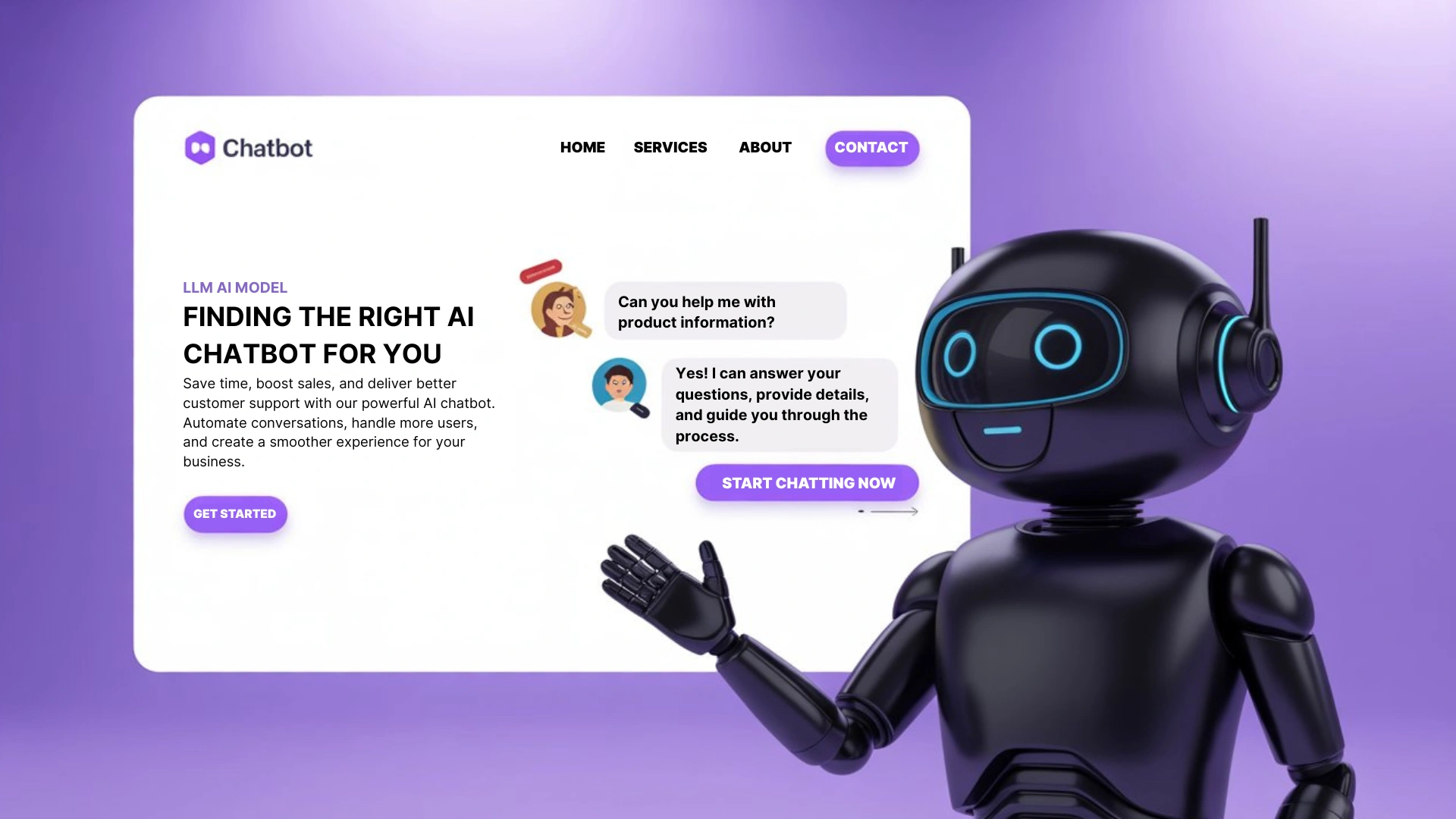
LLM optimization agencies incorporate AI in their services on many levels, providing advanced marketing resources that are either powered or optimized by Large Language Models. These include:
- AI chatbots: Especially in the context of customer support.
- Automatic scheduling: Automated AI-powered calendars for social media and other online platforms.
- Content optimization: Generally, by providing AI assistants for copywriting or offering tools for quickly recycling content using AI (like, for instance, converting a B2B white paper into a short newsletter).
- AI SEO: Including, for example, AI keyword suggestions.
With what they offer, LLM marketing agencies act as a bridge between clients and specialized AI resources, tailored to fit immediate marketing needs and streamlining internal and external processes.
Their main AI optimization goal, however, is to increase visibility on LLMs, resorting to content-creation tactics and technical enhancements that tend to lead to more mentions on ChatGPT and alternative services.
LLM Optimization Agencies vs. Traditional Marketing Agencies
By leveraging the power of Large Language Models, AI-powered marketing agencies can do things more efficiently than agencies that don't use AI. Here's a quick comparison of the two:
So, while LLM marketing agencies have the downside of providing generally standardized responses, limiting originality, they beat traditional marketing agencies in all other parameters.
From the point of view of engine optimization, LLM and traditional marketing differ in how they fine-tune content. Both practices put a similar emphasis on content authority, a metric that's as important for SEO as it is for LLM optimization.
Despite their benefits, LLM optimization services have downsides too, particularly as AI technology still has some shortcomings.
The Challenges of LLM Optimization Agencies

LLM optimization agencies are still a fairly new phenomenon, so there's plenty of room for improvement. Nevertheless, they are always subject to the following challenges:
- Fact-checking: Large Language Models can make mistakes and provide users with incorrect or outdated facts. For this reason, AI-generated services require human fact-checking. Without it, agencies risk selling their clients flawed services; however, human fact-checking is time-consuming, rendering AI's efficiency and scalability obsolete.
- Generic content: While LLMs generate unique answers to user prompts, the fact is that these answers tend to be similar in style and substance.
- Copyright laws: Large Language Models are controversial in many aspects, raising ethical questions regarding the unauthorized usage of copyrighted materials and giving way to privacy concerns.
How to Measure LLM Optimization Success
Measuring LLM optimization success is also challenging for marketers. In SEO, it's as easy as searching relevant keywords on Google and looking at the top results: if your website's there, you know you did a great job! On Generative Engine Optimization, or GEO, however, it takes a more time-consuming approach.
To start measuring your LLM optimization success, compile a list of ChatGPT prompts that are relevant to your brand. If you have an online e-book store, for instance, relevant prompts include questions like "Where can I buy e-books online?", "Which e-book store do you recommend?", and so forth.
Monitor these prompts by focusing on three key aspects:
- See whether your brand is/isn't mentioned by Large Language Models: This way, you'll know if your marketing efforts have paid off.
- Track the sources used by the LLM: If ChatGPT recommends the best e-book stores using an article about "The Best E-Book Stores" published by Forbes (just an example), then you should do your best to be featured in such an article. Forbes is actually one of the websites most cited by ChatGPT, only falling behind platforms such as Wikipedia and Reddit.
- Monitor competitors: Make a list of competitive e-book stores that are being cited by LLMs more often than your brand to know exactly who your competitors are.
Manual LLM optimization monitoring can be frustrating because it's still mainly based on manual processes. However, LLM observability tools are on the rise and can be powerful monitoring allies by automatically tracking essential metrics.
Alongside the number of brand mentions, these tools can be used to track LLM performance by taking into account:
- Overall response quality (including time)
- Hallucinations and other inconsistencies
- Harmful biases
- Performance over time
So, Should You Get an LLM Optimization Agency?
Despite their challenges and imperfections, LLM optimization agencies are simply too efficient to ignore, especially if you're looking for large-scale content creation, scalability, or tools for automating processes, like customer service AI chatbots.
For marketers and business owners, LLM optimization agencies are vital because AI visibility isn't covered by traditional SEO strategies. To increase brand mentions on ChatGPT and other models, a tailored approach is required.
Keep in mind that there are two types of LLM optimization agencies out there:
- GEO agencies: Like SEO agencies agencies, but focusing on Generative Engine Optimization instead. These are the agencies you should be looking for if you want to improve your ChatGPT ranking.
- AI optimization & integration firms: These agencies focus not on improving AI visibility, but on adapting AI systems so they can better assist and integrate into your business operations.
Recommended LLM Optimization Agencies
Convinced? As more and more people switch to AI-centric online searches, it's probably time you consider hiring an LLM optimization agency and increasing LLM mentions. The sooner you join the trend, the better!
We recommend the following LLM optimization agencies (learn more here):
- Red-Engage (our agency): Our LLM optimization services are especially effective because they're paired with Reddit marketing. Reddit is one of the platforms most cited on LLMs, meaning Reddit mentions equal LLM mentions.
- Omniscient Digital: A great choice for big-budget projects. Backed by several successful case studies, with exceptional results for organic traffic growth.
- iPullRank: Also pricey, iPullRank generates a unified LLM optimization plan specific to each client, with services leading up to a 250%+ increase in AI visibility.
While it's important to understand LLM optimization and be in control of your AI visibility strategy, resorting to professional agencies can help you avoid common mistakes, adopt a unified strategy from the get-go, and get ahead of competitors that are still stuck on traditional SEO.